


BLINK GALLERY
AUGUST 19, 2018
BLINK GALLERY
AUGUST 19, 2018
Roxbury, an international destination in recent years given its wildly popular attractions The Roxbury Motel and Plattekill Mountain, is now home to a Writers’ Residency, newly opened by writer Annie DeWitt and photographer Jerome Jakubiec. The three-day residency program includes accommodations, meals, workshops and manuscript review by DeWitt, who teaches writing at Columbia University and is the author of White Nights in Split Town City, greatly reviewed by The New York Times.
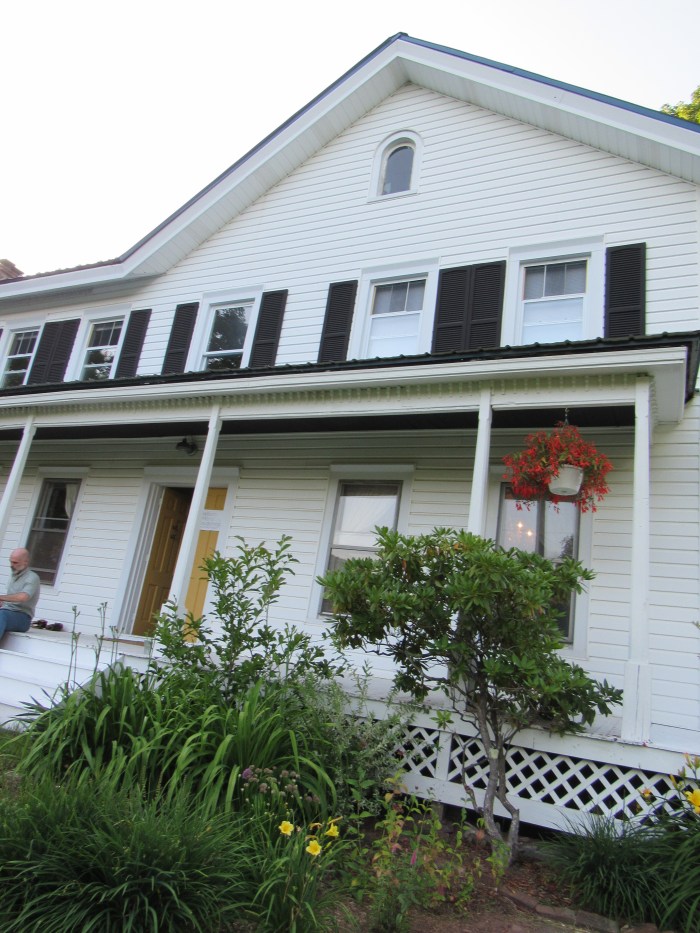
The residency, which opened on July 11, hosted an inaugural Editors’ Panel on July 13, featuring Jonny Diamond, editor in chief of LitHub, and Tracy O’Neill, author of the acclaimed novel The Hopeful and editor of the literary journal Epiphany. Diamond and O’Neill talked about the submission process to literary journals.

Read full article in Chronogram to learn more about this marvelous retreat in the Catskill Mountains.

4/29 Writers Unbound Literary Festival, Union Grove Distillery, Arkville, NY
6/23 Catskill Interpretive Center Book Festival, Mt. Tremper, NY
7/28 – 29 AMR Open Art Studio Tour, Halcottsville, NY
8/19 Blink Art Gallery, Andes, NY
9/8 Zadock Pratt Museum, Prattsville, NY
Look for our news releases to learn more about upcoming events.
On December 10, 2015 the Governor’s Office announced the winners of the Upstate Revitalization Initiative (URI) awards in the amount of $1.5 billion. The Southern Tier was one of the three winning regions, along with the Finger Lakes and Central New York regions. Each region was awarded $500 million to spend on economic development projects over the next five years.
I spoke with Dr. Harvey Stenger, President of Binghamton University, and Co-Chair of the Southern Tier Regional Economic Development Council.
Simona David: Dr. Stenger, please talk a little bit about the Southern Tier Regional Economic Development Council: when was it formed, what is its mission, and its structure? In 2011 Governor Andrew Cuomo created ten regional economic development councils as an effort to improve New York’s business climate and expand economic growth.
Dr. Harvey Stenger: The council and the process for economic development initiative that the Governor has driven started right after he took office. We’re on our fifth year now of being part of this, entering the sixth year in 2016. The process that he developed is a competitive process: we’re ten regions that the state has been divided in to compete annually for funds to do capital projects that can have synergistic and large impacts on the local economies. The Southern Tier is made up of eight counties centered around Broome County but going as far to the West as Steuben, as far to the East as Delaware. A very diverse group of about 600,000 people. The process is that each year we come up with projects. We also have a strategic plan that talks about things that we want to do over a very long period of time rather than just projects. So, when the Governor picks winners each year he looks at their plans, as well as specific projects that they have. This year, as you know, he upped the competition so that the winners competed for $500 million compared to $30 – 40 million per year in the past years.
SD: What is the Consolidated Funding Application (CFA) program, and how does it relate to the Upstate Revitalization Initiative (URI)?
HS: That’s a good question. It got confusing this year. In the past there was only the Consolidated Funding Application where any person or agency or company or municipality could go to the Regional Economic Development Council’s website, and enter a project, the project description, its schedule, and its impact, and how would fit into the region’s plan. That was the process that everyone was familiar with for the last four years. And those funds were typically between $100,000 and $2 – 3 million. Many of them were funded directly through the Empire State Development Agency (ESD), but some of them were funded through other agencies like the Energy, Research and Development Authority, or the Power Authority, or the Department of Transportation, or the Department of Labor. That’s the past. Then this year they mixed together the projects that are called Upstate Revitalization projects and the Consolidated Funding Application projects, but there was a lot of overlapping. The most recent booklet that the Governor’s Office has put out actually divides them up. It shows the Consolidated Funding Application (CFA) awards, and then it shows the Upstate Revitalization awards separately. So you can actually see the difference in this booklet that’s online which projects were considered CFA awards, and which projects were considered Upstate Revitalization Initiative. We’re going to have a Council Executive Committee meeting maybe the second week of January, and try to move as many projects forward as we can, as quickly as we can. We know that time is money, and we want these projects to get started as soon as possible.
SD: So, your mandate was to prepare a Revitalization Plan for the region’s eight counties. The Southern Tier is formed by Broome, Chemung, Chenango, Delaware, Schuyler, Steuben, Tioga, and Tompkins counties. Let’s talk about the process of preparing the Revitalization Plan for the Southern Tier. The State Implementation Assessment Team (SIAT) outlined a number of plan concepts: innovation, leveraging the private sector, investment, connectivity and collaboration, sustainability, workforce development, community reinvestment, global economy, readiness, leveraging other state initiatives. Let’s talk about the process, and also about the team who prepared this plan.
HS: The advantage we had in preparing this new plan was that we had an existing plan that was in really good shape. The plan that we submit every year as part of the awards process has to have in it things that you just listed: from workforce development to the Opportunity Agenda to hard-to-place workers to manufacturing industries. We already had targeted and talked about those things in previous plans. So, it was easy for us to adapt the 2014 Plan to write the 2015 Plan, which is more extensive. But the best part is that we can now think much bigger. We can think in longer terms. In the past we had to think about year by year one set of awards, one set of projects. This new proposal could talk about more than 100 projects that could take place over five years. And now we can start to build synergies between the projects, so that they have multiplier effect. We have a great team that goes out and talks to companies, talks to municipalities, finds out what their needs really are, tries to make sure that the descriptions of their needs are accurate so that when we put our proposal together we know if we’re promising a project that will deliver 100 jobs, and it’s a $2 million investment. So, it’s a lot of foot work, and travel, and conversations that our staff is going through – the staff from ESD, the staff from all the agencies that we work with. We do have some very skilled writers, and I do think that our plan was attractive, and easy to read, and it had a lot of good features. We’re competing against some big cities, we’re competing against Albany, Syracuse, Rochester, all much larger than us, with more resources than us. It’s exciting that we had a good enough plan to be in the top three.
SD: Actually this was one of my questions: What do you think made the Southern Tier’s application so strong? Maybe we can connect this to talking a little bit about some of the projects listed in the Revitalization Plan, and how the priorities were set.
HS: One of the things that we recognized in our data analysis leading up to writing up this most recent version of our URI plan, is that we have a very high concentration of industries surrounding transportation equipment, and these would include companies like Alstom which is in Hornell that makes the trains for Amtrak; BAE in Broome County manufactures avionic systems for aircrafts; Raymond Corporation in Greene, NY makes lift trucks; and, Lockheed Martin makes helicopters. When you look at all those industries you find out that they’re all in the same industry code, and when you look at their density you find that they’re extremely dense in the Southern Tier compared to other parts of the country. What can we do that synergistically can pull them together? A part of our plan – the Advanced Manufacturing Initiative – addresses that specifically to help companies in our region improve cybersecurity.
Another initiative is agriculture. Even though we have an area that’s fairly low in produce development, we have great diary, great beef, poultry, pork, but we’re limited in many ways by a good distribution system. We don’t have a lot of superhighways, we have certain corridors, but a lot of our farms are mixed up in areas where distribution and transportation are difficult. How can we pull together all these distant farms, and find good distribution hubs for them? This is another project that we think will have a pretty large impact on farming and the rural communities, which is a big part of the Southern Tier.
SD: There is also the Greater Binghamton Innovation Ecosystem Initiative – you plan to create several iDistricts (i stands for innovation), including a high-technology incubator and a biopharmaceutical hub in the Binghamton area. The fourth initiative – Promoting the Southern Tier’s Innovative Culture Initiative – is very interesting as well: it seems that you plan to develop a regional brand for the Southern Tier. Let’s talk about this fourth initiative a little bit.
HS: The way I put it to people is that you want to have a great place to work, but also a cool place to live. When I look at what this area probably was 30 – 50 years ago, it was a great place to work and a cool place to live. There were factories in Endicott and Johnson City – IBM in Endicott, the Endicott-Johnson shoe company in Johnson City, and then people ended up in Binghamton in the evening for dinner, or for a play, or for an opera, or a baseball game, or a hockey game, and that’s what we were. We were also a very innovative society. This is where IBM started. We have this history of being very creative and innovative, and having a very good blend of industrial locations and cooler urban centers. But they’ve gone away. In the last 25 years we’ve lost probably ¾ of the manufacturing jobs in this region. These are high-paying jobs, and when they’ve gone away, all those things that were there to help support and provide services for them have gone away. Our job now is to find the bones of what’s left and to inject certain funds into the region to seed and to catalyze the re-growth of those. For example the iDistrict in Johnson City is going to focus on bringing pharmaceutical companies to the Southern Tier. The other area that we’re trying to enhance is the Endicott area where we still have great equipment that can process electronic materials but in a much higher tech way. Downtown Binghamton doesn’t need too much, but we are going to invest some of our funds in high density development trying to create an urban living environment in downtown Binghamton – a lot of student housing there, but we’re looking at more professional housing, and to take advantage of the waterfronts that are in Binghamton, to take advantage of the night life, and try to do some transformative projects.
SD: A couple of questions about Delaware County specifically. I believe Delaware County is the only Catskills county to benefit from the URI awards, just because it belongs to the Southern Tier, one of the three winners, the other two being Finger Lakes region, and Central New York region. First, are there any specific projects to be developed in Delaware County? Second, when we’re talking about developing a Southern Tier regional brand – here in the Catskills we’ve been talking about promoting the Catskills as a region – how will this impact Delaware County?
HS: I think it’s unfortunate that we don’t get Sullivan County too. But Delaware is a beautiful county, along the east branch of Delaware River; the fishing streams in there are historic, and some of the resorts that are in Delaware County are outstanding. Two of the projects that are going to be funded right away are in Delaware County. One is part of The Roxbury Motel that’s certainly a destination. They’re going to rehabilitate about 5,700 sq ft of the federal mansion into guest rooms; we’re going to provide about 20 percent of the funding for that. The second one is an infrastructure project in the village of Walton. This will update their waste treatment facility to make it more efficient, and to have an anaerobic digester that will create biogas that can actually be burned to generate electricity. Peg Ellsworth, who is Delaware County’s representative, certainly has lots of great ideas, great projects. We’re looking at some of the things that we can brand. One of the things we’re trying to do is attract people from New York City, and bring them into the Southern Tier for culture and tourism events, but also to bring their companies here, and maybe move from New York City to a lower cost Southern Tier facility. We can have Delaware County be the gate to the Southern Tier. Delaware County is a great asset that we have.
SD: Is there anything else you’d like to add?
HS: I do think there are still a lot of details that are developing, people are still wondering about all of the impacts, and all the different projects. The Regional Council will be meeting in January. There will be public meetings; people are encouraged to come and give us their comments and thoughts. It’s great to have a Governor who appreciates the upstate revitalization process, and the legislative support that’s going to be necessary to make these investments, and make sure they are successful.
SD: Are you still considering new projects?
HS: Most definitely. We have several projects that aren’t completely developed. We will be working with certain agencies to put more details into those plans, and you’ll be seeing more of the Regional Economic Development Council in the Southern Tier asking people for their ideas, and for their projects. We’ll be constantly evolving.
SD: How do you plan to communicate the status of these projects, and let people know about the progress that’s being made?
HS: We’re pretty good at keeping our website updated at http://regionalcouncils.ny.gov/cohttps://regionalcouncils.ny.gov/southern-tierntent/southern-tier. In there you’ll see our updated plan from last year, you’ll see our video from last year that talks about dozens of projects across the Southern Tier and the status of these projects. You’ll also be able to find our presentation of our future proposal and our URI proposal – there’s a video as well as a document of that. Every project that gets funded is reviewed, and we count jobs, and cost-sharing, and all that can be found on that public site as well.

Writers in the Mountains (WIM) invites you to the Andes Roundtable, Wednesday, October 7, 2015 at 7 pm. The event is held at the Hunting Tavern, on Main Street in Andes, NY. Attendees will learn about WIM’s mission and programs, hear some of the region’s best writers, and have a conversation about the role of arts and letters in the Catskill region.
Writers in the Mountains (WIM) is a literary organization founded twenty-three years ago in Roxbury. Over the past two decades the organization has grown to include more than three hundred writers from all backgrounds, all ages and levels of experience, writing in all genres and styles. WIM offers a variety of creative writing workshops year round throughout the entire Catskill region: fiction, poetry, memoir, playwriting, publishing, business writing, illustration, and more.
In addition to a broad range of workshops and seminars, in 2012 WIM launched an essay contest for middle and high school students in Delaware County. The essay contest encourages young writers to pursue their passion and dare to write – WIM’s motto. This year’s topic is What is your favorite music, and how does it move you?
Additionally, in 2014 WIM ventured into yet another arena: in April 2014 WIM started a book festival for authors, publishers and booksellers in the Catskills and Hudson Valley area. In 2015 the keynote speaker was award-winning author Jenny Milchman, published by Ballantine / Penguin Random House.
Writers in the Mountains hosts The Writer’s Voice, a weekly radio program on WIOX, broadcast Tuesdays at 1 pm, and produced by poet Sharon Israel.
WIM Board of Directors includes professionals with a wide range of skills and expertise: Simona David (consultant), Sharon Israel (poet), Geoff Rogers (writer), Peg DiBenedetto (publisher), Leslie T. Sharpe (professor, author and consultant), Lillian Browne (journalist), Carrie Bradley Neves (editor), Elizabeth Sherr (professor) – all professionals with a strong vision for what the organization is and can be.
Writers in the Mountains is a 501(c)(3) not-for-profit organization with a mission to provide to the general public a nurturing environment for the practice, appreciation, and sharing of creative writing. For more information, visit writersinthemountains.org.
This past Sunday Writers in the Mountains in partnership with Glaring Omissions Writing Group co-hosted a panel discussion Writing Fiction Today – Literary vs. Genre Fiction: Real Distinction or No Difference at All? at the Golden Notebook bookstore in Woodstock.
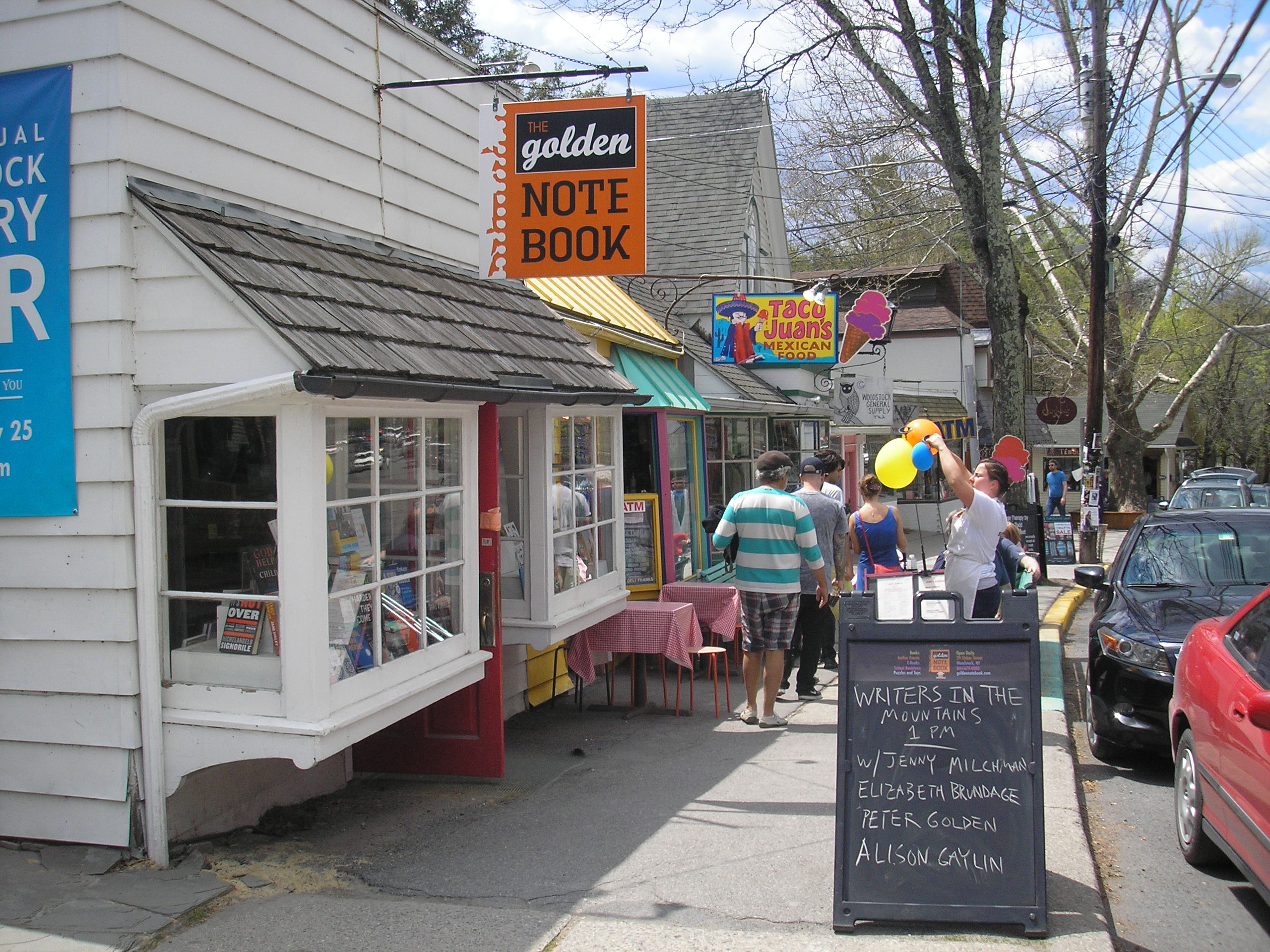
The panel discussion was moderated by Jenny Milchman. Jenny’s debut novel, Cover of Snow, earned starred reviews from Publishers Weekly and Booklist, as well as praise from the New York Times, San Francisco Journal of Books, the AP, and other publications. It was an Indie Next and Target pick, won the Mary Higgins Clark Award for best suspense novel, and was nominated for the Macavity and Barry Awards for best first novel. Her second book Ruin Falls, also an Indie Next Pick, was published in 2014 to starred reviews from Booklist and Library Journal, and chosen as a “10 Best of 2014” by Suspense Magazine. Jenny’s third novel, As Night Falls, will be published on June 30th, 2015.
Before I summarize the panelists’ remarks, allow me to make a few general considerations. Right before the panel discussion started, I googled literary vs. genre fiction. And the fastest answers I got were:
Also:
And:
Last November Joshua Rothman from The New Yorker wrote A Better Way to Think About the Genre Debate (you can find full article here). Rothman pointed out that contrary to the general belief that genre fiction doesn’t get nominated or receive literary awards, Station Eleven, a dystopian novel by Emily St. John Mandel, made it in fact among the fiction finalists for the National Book Awards last year. Rothman also pointed out that novels such as Dostoyevsky’s Crime and Punishment are both literary and genre fiction.
Now going back to last Sunday’s panel, here is what the panelists had to say.
Alison Gaylin
“I just like to write a good story. Booksellers find the distinction helpful to know where to shelve a book. And also publishers find it helpful to know how to market the book. There are many genres: romance, thriller, sci-fi, etc.”
Gaylin, a USA Today and international best-selling author, received an Edgar nomination for her first book Hide Your Eyes. Her Shamus Award-winning novel, And She Was, was also nominated for the RT award, the Thriller and Anthony awards. In addition to her six published crime fiction novels, she’s published the Young Adult mystery Reality Ends Here (Simon and Schuster/PocketStar). Stay with Me, her eighth book – and the third in the acclaimed Brenna Spector series – was just nominated for an Edgar Award for best paperback.
Elizabeth Brundage
“I agree with Alison that bookstore owners need to know where to put the book, but it could backfire in a way. I like to call my books literary thrillers. Because I put a lot of effort in every sentence that I write. I think it’s mostly the way the books are marketed that had created this distinction. My last book Stranger Like You was marketed as a thriller, as opposed to my first two which were marketed more like general literary fiction. Stranger Like You sort of got lost, and people couldn’t find it. The distinction is not what motivates me to write; I just want to tell a good story. And I think what people like is some sort of driving narrative focus. The effort you put into character development is what makes a novel more literary – the voice of the characters and things like that.
Write a book that conveys your vision of the world.”
Brundage holds an MFA from the prestigious Iowa Writers’ Workshop, where she received a James Michener Award. Before attending Iowa, she was a screenwriting fellow at the American Film Institute in Los Angeles. Her short fiction has been published in the Greensboro Review, Witness, and New Letters. She is the author of three novels, Somebody Else’s Daughter, The Doctor’s Wife, and A Stranger Like You, all published by Viking. Her new novel, All Things Cease to Appear, is forthcoming from Knopf in 2016.

Peter Golden
“I think this distinction became a problem for bookstores after WWII. It’s a post-war problem. Writers wrote for markets. But in the 1950s, early 1960s writers began to go to universities, and write for tenure. That was a different novel than writing for the markets. They needed different reviewers saying good things about their books. And then what happened was that people in the academia became very resentful of people in the marketplace, and vice versa. Hemingway wrote The Sun Also Rises because he wanted to become a commercial writer; he didn’t think he could make it by just writing short stories.”
Golden is an award-winning journalist and the author of six full-length works of non-fiction and fiction. His first novel, Comeback Love, was published by Simon & Schuster. Some of his work has appeared in the Detroit Free Press Magazine, Albany Times Union, New Jersey Monthly, Microsoft’s eDirections, Beyond Computing, Electronic Business, Midstream, The Forward, and Capital Region Magazine.
Going back to Jenny Milchman, a couple of days prior to this panel discussion, she started a Facebook thread, and engaged with fellow writers in a passionate, well-argued debate. One commenter remarked that good writing is good writing, and bad writing is just that – bad writing. Another one said that he thought at literary fiction more in terms of general fiction, whereas genre fiction is a clearly recognizable genre (or maybe even a niche genre, I would add). Yet another one added that it’s become fashionable to label almost anything outside of the genre fiction as literary, and that makes the label meaningless. One commenter discussed the dichotomy ideas vs. emotions: ideas as pursued in literary fiction by those intellectually oriented, and emotions as explored in genre fiction for readers looking to have an emotional experience. Someone else summed up that this is an overrated question, and that readers don’t understand or care about.
What are your thoughts about literary vs. genre fiction?

Art in the Catskills, The Definitive Guide to the Catskills’ Rich Cultural Life is a compendium of one hundred and twenty-three arts organizations, events and other attractions in the Catskills and surrounding area, some in the neighboring Hudson Valley, and others elsewhere upstate New York. The guide includes anything from museums and memorial sites to summer festivals, art galleries and residencies, as well as theater and literary retreats. It walks the reader through a wide geographic area, from Woodstock to Livingston Manor, and Saratoga Springs to Cooperstown. Easy to digest, Art in the Catskills is a great resource for art enthusiasts travelling through the region.
 Simona David Consulting