


“I have a feeling that in art the need to understand and the need to communicate are one,” remarked Hedda Sterne, revered Surrealist painter.
Coming out of a 14-month once in a century pandemic, we take a moment to reflect on this monumental experience and make sense of the changes we have witnessed around us thus far.
Artists have extraordinary perceptual abilities, an attribute that Marshall McLuhan referred to as “integral awareness,” something that will guide us through the process of re-gaining meaning in a post-pandemic world. Societal forces play their role as well in influencing the artistic product from idea to execution and reception of the artwork in the field as the artist and his or her social surroundings are interdependent.
The pandemic took a year out of our otherwise normal life – everything was turned upside down. The unexpected circumstance changed our mindset, and forced us to adapt like never before. It also provided the sudden opportunity to slow down and re-think priorities. The post-pandemic world will look a lot different than the pre-pandemic one.
But how exactly does the art world respond to this colossal transformation in our life? In her seminal book “Meaning and Expression: Toward a Sociology of Art,” first published in Germany in 1967, Hanna Levy Deinhard exemplarily illustrated how humans are able to distinguish in a work of art its visual expression from its meaning. While visual expression however remains relatively constant over time, its meaning is subject to change. Deinhard strived to reconcile the everlasting contradiction in art between the artwork as a timeless object and the artwork as an expression of its time.
We spoke with prominent Catskills artists to learn about their experience during the pandemic and how that might have impacted their creative life. Read their accounts at https://artinthecatskills.com/2021/07/10/pandemic-art-heartfelt-stories-from-the-catskills/

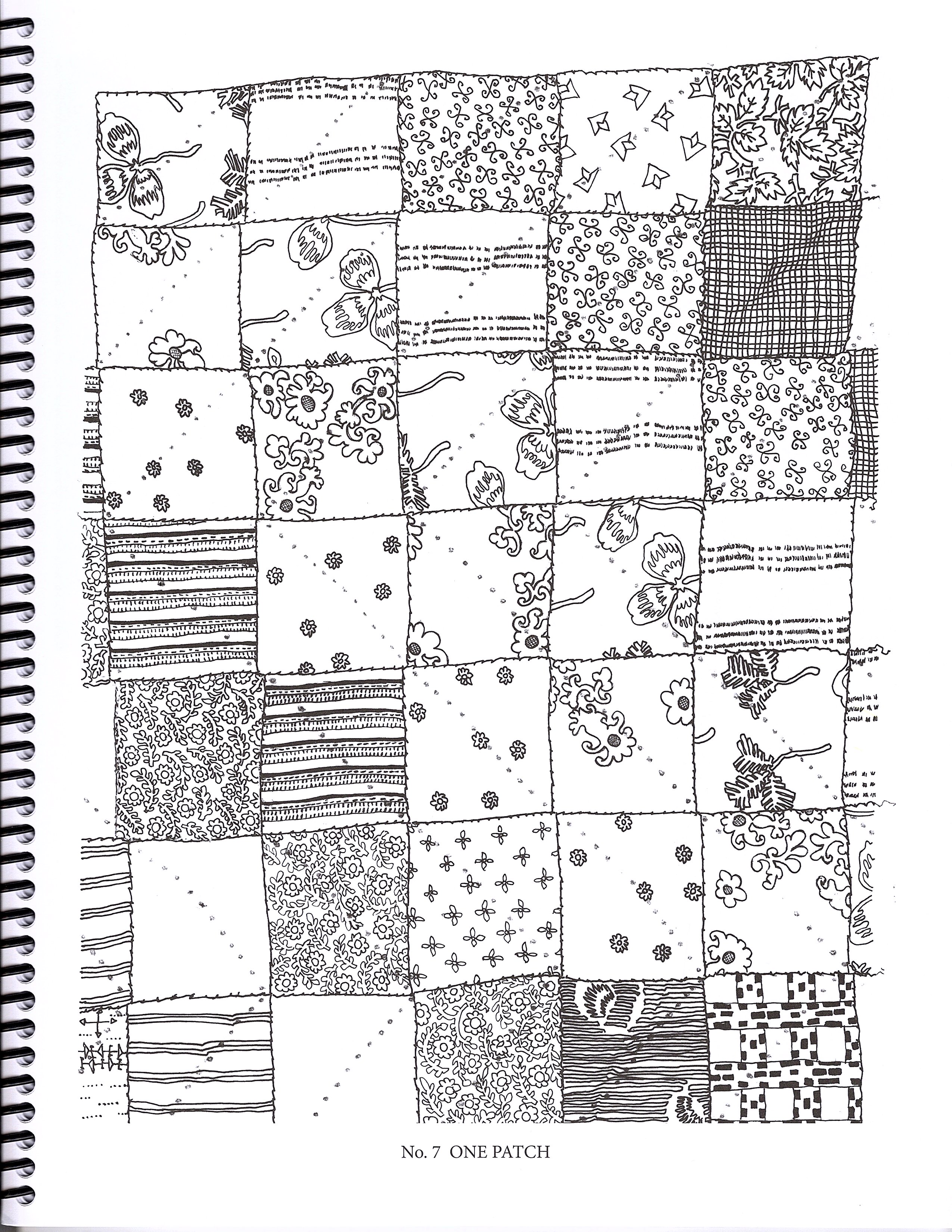
The Zadock Pratt Museum has just released a coloring book for adults, essentially a collection of historical quilts accompanied by text and drawings that provide a unique perspective of the region’s settlement history. Inspired by the 2018 exhibition titled “Undercover Stories,” the book was partly funded by The A. Lindsay and Olive B. O’Connor Foundation and The Nicholas J. Juried Family Foundation. All text and drawings are by Suzanne M. Walsh, who curated the exhibition.



© Zadock Pratt Museum
Coloring books for adults have been around for decades but have become quite popular in recent years, as a stress relief activity. In 2015 Crayola launched its own line of adult coloring books, for the first time in its more than a century history. The company also expanded its variety of colored pencils and markers, including the ones with extra fine tip, to fit a wider range of projects. Coloring a book is not only a relaxing activity but it’s also a means of self-expression and a creativity jump-starter. Some users frame their artworks to display and share with family and friends. The richness of possibilities is motivating.
The Zadock Pratt Museum’s Collection of Twenty-Six Catskill Historical Quilting Designs is more than a coloring book. It’s also a reflection of Early America coded in the quilting designs of the women who moved to the region which eventually became the Schoharie and Greene Counties of New York State. In a note prefacing the book, Ms. Walsh explains: “the women of mixed Palatine and Dutch heritage arriving in Schoharie Kill in the 1700s found themselves living during the time when the screams of the mountain lion were a chilling reminder of just how wild this frontier outpost really was; nonetheless, with brave hearts and steady hands they cut and stitched their quilts with the astonishing skill and imagination they passed to their descendants. Some of their legacies are found in this book today.”
Quilting has been described by scholars as “the art of necessity.” When textiles were scarce, women patched old blankets, coverlets, and table runners with cloth they had available and ready to use. European settlers brought this practice to the New World, and it flourished here and took on a new life. A utilitarian activity at first, quilting did eventually become an American folk art.
According to Lisa J. Allen who writes about the history of quilting in America, “In the 100 years between 1750 and 1850 thousands of quilts were pieced and patched, and many of them are preserved. Many of these quilts were so elaborate that years were spent making and quilting them. It is no wonder they are cherished as precious heirlooms and occupy honored places in homes and museums. Those early quilts provide a glimpse into the history of quilting as well as the history of the United States.”
American Folk Art Museum in New York City has an impressive textile collection, and has begun the New York Quilt Project to locate, document, preserve, and create an archive for New York State quilts. Dr. Jacqueline M. Atkins, a curator who worked at the Folk Art Museum, wrote the introduction for the The Zadock Pratt Museum Coloring Book, and shared “the thrill of the hunt, as one is never sure just what new and exciting quilts, patterns, and designs will turn up in addition to renewing acquaintances with many old favorites.”
Among the 26 quilts included in the book, our favorites are the Japanese Fan (a 19th century feed sack quilt), Honeycomb (a coverlet dated 1929), and the Friendship Quilt (dated around 1850s). The Japanese fan motif became popular in the U.S. after the Centennial International Exhibition that took place in Philadelphia in 1876, as related by Atkins; Catskill artisans quickly incorporated the motif in their work. The Honeycomb quilt block known by other names as well, most notably Hexagon, but also Mosaic or French Rose, may be in fact one of the oldest known quilt blocks in America. The Friendship Quilt was created by several women as a solace for a loved one who would move West. Each block was sewn in secret by a friend or a relative who signed their name in ink or embroidered it on their finished block. During the 1850s it became popular to embroider the name rather than sign it in ink, a practice that would help historians date the quilts.


© Zadock Pratt Museum
The Zadock Pratt Museum’s Collection of Twenty-Six Catskill Historical Quilting Designs can be ordered by phone at (518) 299-3395, email at prattmuseum@hotmail.com, or mail at Pratt Museum, PO Box 333, Prattsville, NY 12468. For questions about this project, you may contact Suzanne Walsh at (518) 937-6120 or suzanwal5@aol.com. All funds go to support the Museum’s mission. To learn more, visit zadockprattmuseum.org.
The Zadock Pratt Museum in collaboration with Prattsville Art Center presents Prattsville Clews – A Case Study by Clover Archer, an online exhibition exploring micro or granular histories – small ordinary moments in everyday lives that fill in the vast amount of time around lifetime milestones or what is more generally considered “important.”
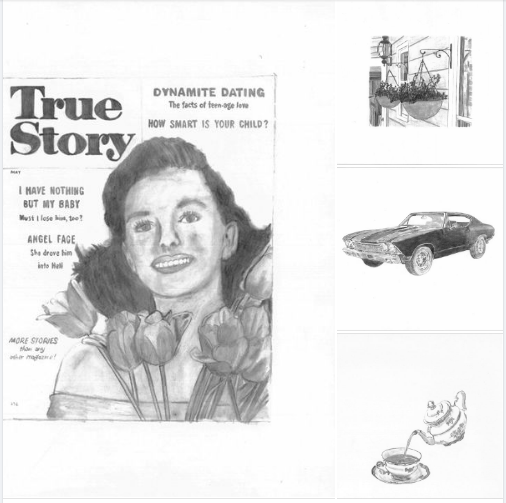
In the summer of 2019, as an artist in residence at the Prattsville Art Center, Clover Archer worked closely with the Zadock Pratt Museum to learn more about the history of the area. During this time, she met with Prattsville citizens who generously shared their family histories, stories, photographs, and memorabilia. While meeting with local residents, the artist made notations on large family tree charts documenting their stories as the Prattsvillian contributors reminisced. The artist calls these small human histories “clews.” Our contemporary word “clue” is derived from the word “clew,” originally meaning a ball of yarn or thread. In one Greek myth a “clew” or ball of yarn is used to lead the way out of a labyrinth, which is how we have come to understand the word to mean something that leads to a solution or an answer. Thinking of the labyrinth as a metaphor for life, the artist considers these granular histories to be the moments that lead us through the maze of our existence – guiding the way and filling the time between the more memorable and more commonly documented occasions. Based on this information, the artist has created a series of graphite drawings illustrating a small sampling of the clews that are connected to Prattsville. These small details are both particular to Prattsville and yet not geographically specific. Looking at these illustrations of the ordinary (i.e., a broom, a sled, a car, a cow, etc.), we all have associations with them – we see them as familiar and share the humanity of the small particulars. All drawings are 8 x 10 inches, graphite on paper, made in 2019 and 2020.
The project is funded in part by the National Endowment for the Arts, the New York State Council on the Arts with the support of Governor Andrew M. Cuomo and the New York State Legislature and by public funds from the Greene County Legislature through the Cultural Fund administered in Greene County by CREATE/Greene County Council on the Arts, the O’Connor Foundation, New York University, and others.
Visit the exhibition online at https://zadockprattmuseum.org/prattsville-clews-exhibition/
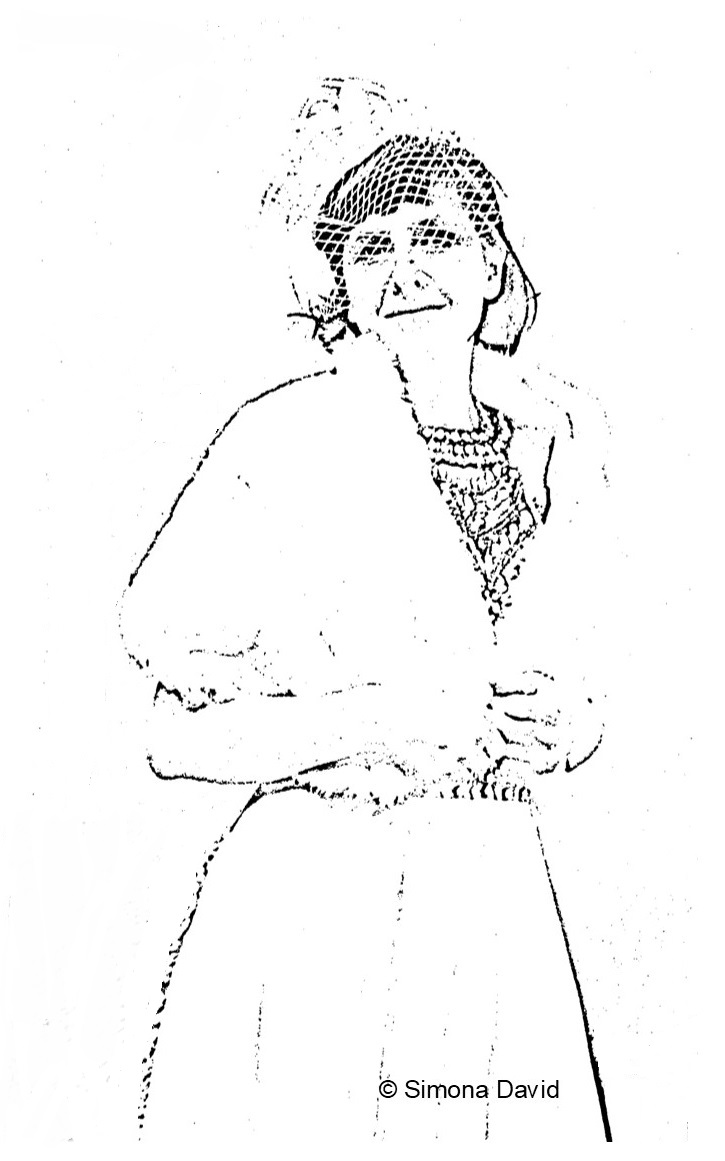
ART CONVERSATION AND WRITING WORKSHOP WITH AUTHOR SIMONA DAVID
SATURDAY, SEPTEMBER 8, 2018, 1 – 2:30 PM
THE ZADOCK PRATT MUSEUM, 14540 MAIN STREET / RTE 23, PRATTSVILLE, NY
As guest of the Zadock Pratt Museum, Simona David, author of “How Art Is Made: In the 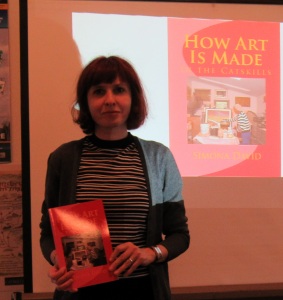 Catskills” (2017), will talk about her experience interviewing artists, and discuss what moves and inspires the creative mind, how a new artistic project is born, how materials are used and different stylistic choices are made, how setbacks are dealt with, and how success is celebrated.
Ms. David will then teach a workshop on art writing, and discuss various research and writing techniques.
To register, call Pratt Museum at (518) 937-6120.
This event is funded in part with public funds from the New York State Council on the Arts with the support of Governor Andrew Cuomo and the New York State Legislature.


BLINK GALLERY
AUGUST 19, 2018
SUNDAY, AUGUST 19, 2018, 1 – 3 PM
BLINK GALLERY, 454 Lower Main Street, Andes, New York 13731
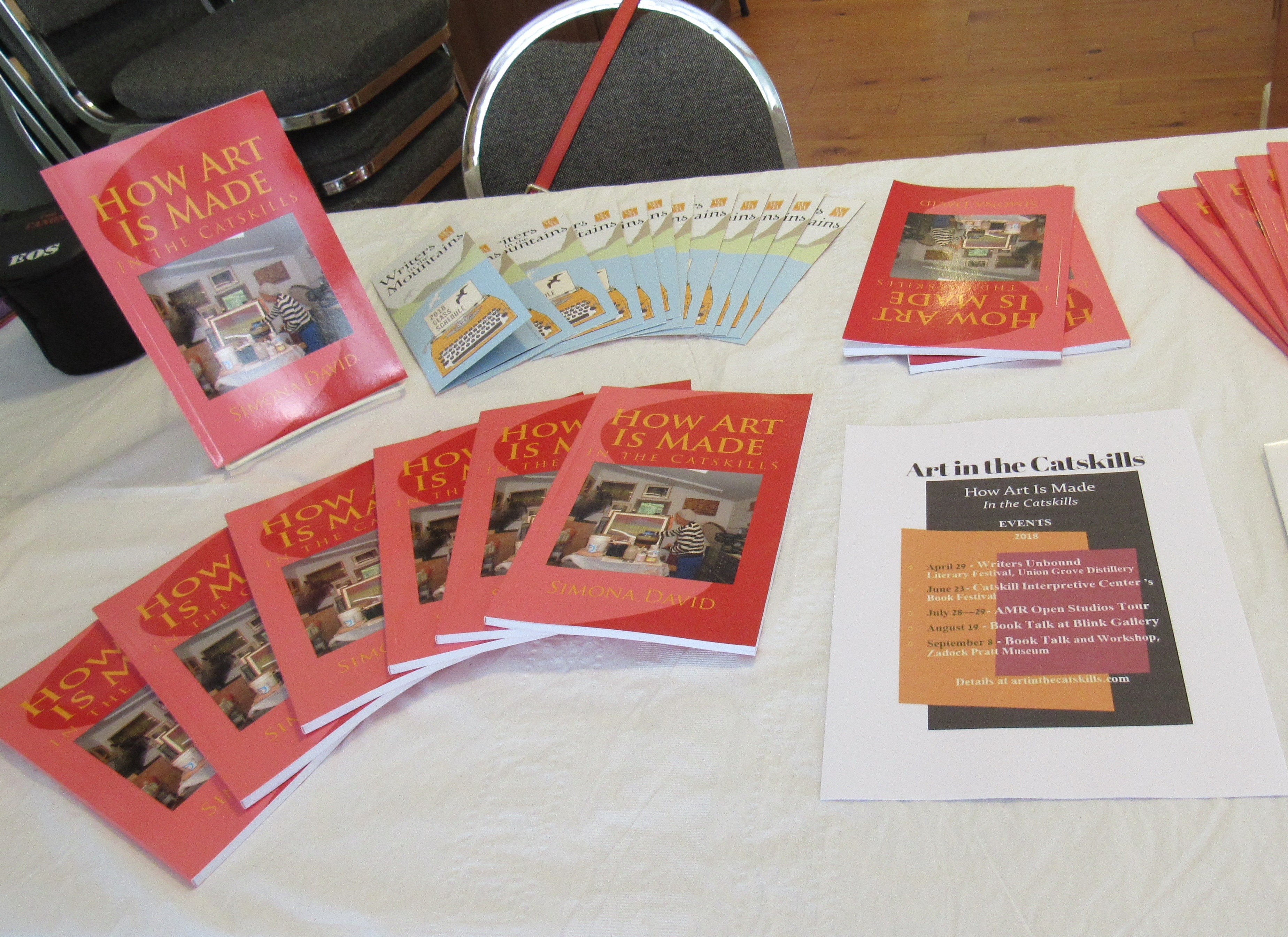
Author Simona David will talk about her latest book How Art Is Made: In the Catskills (2017), and provide insights into a long-standing tradition that dates back to the days of Thomas Cole and Frederic Edwin Church.
How Art Is Made: In the Catskills pays homage to the place where American art was born through a series of conversations with creatives who live and work in the Catskills.
The book explores various artistic choices, what inspires and moves the artists, what draws them to their discipline, what materials they use, how they approach a new artistic project, how they deal with setbacks, and how they celebrate success.
Artists featured in the book include sculptor Brian Tolle, known for The Irish Hunger Memorial in Battery Park City (2002), and more recently for Miss Brooklyn and Miss Manhattan, two replicas of Daniel Chester French originals that sit on the façade of the Brooklyn Museum – Tolle’s replicas were installed on Flatbush Avenue by the Manhattan Bridge in December 2016. Like many contemporary artists, Tolle maintains a studio and works in the Catskill Mountains.
To learn more about Art in the Catskills, visit artinthecatskills.com. To learn more about Simona David, visit simonadavid.com.
BLINK GALLERY celebrates the creative spirit that resides within all artists with a focus on women artists. Learn more about the gallery’s mission at http://blinkandes.com/.

