Why Trust Matters

Photo by Jess Bailey Designs on Pexels.com

Trust is essential in ensuring a peaceful and prosperous society. The pandemic has broken the patterns of trust that we have grown accustomed to in order to make decisions. The Edelman Trust Institute has published a collection of essays addressing the multitude of challenges we currently face to balance health care, economic prosperity and personal freedoms as we strive to rebuild for a post-pandemic world.

Main take-aways:

  1. Have a clear mission and set of values
  2. What you say and what you do ought to be aligned
  3. Consistency matters
  4. Transparency matters
  5. Incompetence is a trust destroyer
  6. Be honest about your limitations
  7. Prioritize collaborations with others
  8. Good companies invest in good employees
  9. Emotional intelligence matters
  10. Inclusion matters
  11. Climate change pledges matter
  12. Fighting disinformation is more important than ever
  13. It takes time to build trust
  14. Trust is built when promises are kept
  15. Highlighting solutions not just problems makes for a better world

According to the Edelman Trust Barometer, businesses are currently the most trusted institutions in our society. Laszlo Bock, the CEO of Humu, advises though that as employees return to office, employers ought to relax performance standards and allow the employees to re-set their roles in a welcoming environment to avoid burn-out and ensure long-term retention and satisfaction. Employees are looking for confident, competent, and compassionate leaders.

Regarding the crisis in governance, Juha Leppänen from Demos believes that “leadership in the 21st century is not about having all the right answers, but about continuously learning and collaborating rigorously in inventive new ways.” Leppänen believes that by embracing humility governments can cultivate stronger relationships with stakeholders and generate more trust. His advice is to incentivize collaboration and participation.  

Read the full report at edelman.com.

Beekman 1802 Acquired by Global Investment Group

Source: Facebook

In December Albany Business Review reported that Beekman 1802, the beloved lifestyle company located on a historic farm in Sharon Springs, was acquired by Eurazeo, a French investment group, in a $92 million acquisition that will propel the brand into global growth.

Josh Kilmer-Purcell and Brent Ridge, the stars of reality TV show The Fabulous Beekman Boys, co-founded Beekman 1802 in the aftermath of the 2008 Global Recession, when the duo left the City and purchased a goat farm upstate New York – Kilmer-Purcell documented the story in “The Bucolic Plague: How Two Manhattanites Became Gentlemen Farmers: An Unconventional Memoir” published in 2011.

Once in the country, Kilmer-Purcell (a writer) and Ridge (a physician) came to the realization that they better make the farm profitable if they were to keep it. And soon their goat milk bar soap was to become a sensation among people interested in skincare products. By launching a fast-growing lifestyle brand, Kilmer-Purcell and Ridge energized and revitalized the entire town – their story has been featured on The Martha Stewart Show, and in The New York Times, The Wall Street Journal, Vanity Fair, and many other publications. The duo has also published several cookbooks including “The Beekman 1802 Heirloom Dessert Cookbook” (2013), “The Beekman 1802 Heirloom Vegetable Cookbook” (2014), and “Beekman 1802: A Seat at the Table” (2017), all inspired by their Upstate New York farm lifestyle.

Reporting on the recent acquisition, Forbes remarks that Beekman’s “from-the-farm, friend-get-a-friend style of marketing is ready to reach across the globe.” 

We will be following their next chapter.

2022 Marketing Trends

Photo by tyler hendy on Pexels.com

As 2021 comes to an end, marketers take stock and plan for 2022 in anticipation of higher marketing budgets.

HubSpot conducted a survey with over 1,000 global marketers and identified five main trends to watch in 2022:

  1. Short-form video
  2. Influencer marketing
  3. Audio content
  4. Social responsibility
  5. Inbound marketing

The pandemic has propelled short-form video at the forefront of digital marketing as a fun and convenient way to disseminate information. Short-form video will continue to rise in popularity in 2022.

As revealed by HubSpot, in 2021 influencer marketing has provided the highest return on investment (ROI) for marketers, and 2022 is shaping up to be an influencer marketing year as well. One trend we might notice is brands migrating towards micro-influencers as opposed to the most popular names because micro-influencers are likely to provide access to a smaller but more engaged audience.

Audio content is on the rise. Marketers have gotten comfortable with using podcasts and other forms of audio content to engage with their audiences on the go. One can listen to audio content while cooking, hiking, or engaging in other activities and avoid the screen fatigue that comes with video content consumption. 2022 will bring an even higher consumption of audio content.

To read the full report, visit https://blog.hubspot.com/marketing/b2c-marketing-trends.

Collaborative Marketing Ideas

Photo by Jess Bailey Designs on Pexels.com

Complementary brands with a similar audience or marketing goals often engage in collaborative marketing, in other words combining resources and efforts, to amplify outreach and boost sales. Benefits of collaborative marketing include reaching out to new audiences, cutting costs, combining expertise, and benefiting from brand association. Successful collaborations enhance customer experience and sometimes even offer products and services that are exclusive to the said collaboration.  

As the holidays approach, companies think creatively about marketing their products and services.

Collaboration with complementary brands may include:

  1. Pop-up stores
  2. Joint events
  3. Joint advertising
  4. Exclusive deals and discounts
  5. E-books
  6. Newsletters  
  7. Partnership emails
  8. Blog guest posting
  9. Social media shout-outs
  10. Instagram takeovers
  11. Podcasts
  12. Affiliate programs

Frequently bought together items on Amazon for instance may give small businesses some workable ideas.  

Here are some examples of collaborations that we love:

  • deals and discounts partnerships between hotels and ski resorts;
  • joint advertising between apparel and outdoor activities;
  • partnerships between gyms and personal trainers;
  • joint events between bookstores and coffee shops;
  • cooking classes hosted by farms and restaurants.

Finding the right partnership is key to a successful marketing campaign. Collaborative alliances ought to be designed as a win-win situation for both parties. The terms of participation must be clarified since the get-go. Often times these efforts lead to ongoing cooperation.

The Recreation Economy for Rural Communities Planning Assistance Program – Applications Are Due by November 22

U.S. Environmental Protection Agency (EPA), the U.S. Department of Agriculture (USDA) Forest Service, and the Northern Border Regional Commission (NBRC) have launched a Planning Assistance Program for rural communities to enhance the connection between Main Street businesses and recreational activities nearby in an effort to build stronger communities for a sustainable future. Through the planning assistance program communities across the country learn how to develop strategies that are conducive to smart growth, and benefit both Main Street activities and the outdoor recreational assets nearby.  

Thriving communities invest in amenities such as broadband service, electric vehicle charging stations, housing, art centers, shops, restaurants, and breweries to ensure a high quality of life for residents but also attract visitors who are drawn to the area by the surrounding outdoor recreational activities.

The village of Cambridge, NY, for instance, was one of the communities selected in the first round launched in 2019. Through the planning process, assets were mapped, and priorities were set to connect recreational and cultural assets as well as promote smart growth. You can learn about this process at https://outdoorfuncambridgeny.org/.

The applications for the next round are due by Nov. 22, 2021. Learn more about this program and how to apply at https://www.epa.gov/smartgrowth/recreation-economy-rural-communities-2021-application.

Ogilvy Report Highlights Shifts in Human Behavior and Societal Trends

Photo by Pixabay on Pexels.com

Ogilvy released a report called “Hope Creates Impact: Six Shifts from the Intersection of Culture and Commerce” that analyzes the shifts and the brands’ response to them in making the world a better place. As a backdrop, the company highlights the intersection of “Apocalypse Now” and “Hope for Tomorrow”, two co-existing and competing trends defining our current time.

As detailed in the report, the shifts were identified after months of tracking the intersection of culture and commerce and discovering what has made an impact. Fashion, movies, art, music, advertisements, new product launches, business, gossip, and news – they were all analyzed to uncover ways in which human behaviors, desires, and motivators have shifted during these tumultuous times.

Six key shifts were identified:

1. Beta-Testing Self
2. Kind Connection
3. Slow Down
4. Net Positive
5. Heal Yourself
6. Feel Alive Again

Beta-Testing Self is a shift in how people approach life choices, including career opportunities – we are all now in a state of permanent beta-testing, exploring new things and new avenues. Brands are capitalizing on this trend and enabling self-making and adaptability.

Kind Connection is a shift in how people view relationships. To quote from the Ogilvy report, “The pandemic was a big driver of this trend, as it equated solitude with safety. But more than that, the lockdown brought clarity and fresh perspective to our relationships. We realized who our true friends were, and we deepened our connection with them.” A manifestation of this trend is what Ogilvy calls “COVID weddings” – the ballroom ceremonies were swiftly replaced with intimate affairs that only included a handful of guests.

Slow Down is a shift that, once imposed by the pandemic lockdown, has forced us to re-assess the cost of the old way of doing things. Moving to the country, embracing remote work, and other lifestyle choices are here to stay. Intimate, outdoor, and mindful experiences are what people are looking for, and brands are capitalizing on that.

Net Positive is a way of doing business which puts back more into society, the environment and the global economy than it takes out. The pandemic has accelerated this trend. According to the Ogilvy report, “ninety percent of consumers believe that companies have a responsibility to take care of the planet and its people.” That is something that brands cannot ignore.   

Heal Yourself is a shift caused by the pandemic that has led people to consider their health as something crucial to protect. People are making lifestyle choices and are also creating contingency plans like never before. And brands are called upon to enable meaningful changes.  

Feel Alive Again is a shift emerging as we come out of the pandemic lockdown, and once again seek excitement and experiencing life to its fullest extent. The Ogilvy report mentions The Immersive Van Gogh Experience in Chicago and New York City as one such new way of feeling alive in a post-pandemic world. It is estimated that the experience economy will be worth $12B or more by 2023.

To read full report, visit https://www.ogilvy.com/ideas/hope-creates-impact-six-shifts-intersection-culture-commerce

Downtown Revitalization Initiative (DRI) – A Quick Overview  

Launched in 2016, The Downtown Revitalization Initiative (DRI) has been envisioned as “a comprehensive approach to boosting local economies by transforming communities into vibrant neighborhoods where the next generation of New Yorkers will want to live, work and raise a family.”

As highlighted in the DRI 2021 Guidebook, the program’s fundamental goals are:

• Creating an active, desirable downtown with a strong sense of place;

• Attracting new businesses (including “Main Street” businesses), that create a robust mix of shopping, dining, entertainment and service options for residents and visitors, and that provide job opportunities for a variety of skills and salaries;

• Enhancing public spaces for arts and cultural events that serve the existing members of the community but also draw in attendees from around the region;

• Building a diverse population, with residents and workers supported by complementary diverse housing and employment opportunities;

• Growing the local property tax base;

• Providing amenities that support and enhance downtown living and quality of life; and

• Reducing greenhouse gas emissions by creating compact, walkable development patterns that increase public transit ridership and allow for adoption of district-wide decarbonized heating and cooling; and by supporting efficiency and electrification of buildings, installation of onsite renewable energy generation, and electric vehicle charging.

Each year ten communities – one from each of the State’s ten Regional Economic Development Councils (REDCs): Western New York, Finger Lakes, Southern Tier, Central New York, Mohawk Valley, North Country, Capital Region, Mid-Hudson, New York City, and Long Island – are awarded $10 million each for strategic investments in transformative projects that can bring commerce and culture together for an increased sense of place and amplified economic vibrancy.

In the first four DRI rounds, forty communities were selected to receive $10 million each “to undertake a bottom-up community planning process and to implement key projects recommended by the community.” Through the planning process, each community develops a shared and clear vision for what is needed to ensure a successful downtown revitalization and sets goals and lays out strategies to accomplish that vision. At the end of the process, a strategic plan is created to implement the catalytic projects as identified in the plan. In addition to community-based strategic planning, a successful DRI process involves sustained inter-agency project support and outside investments.

The Strategic Investment Downtown Revitalization Initiative Plan ought to include:

  • Downtown profile and assessment;
  • Community vision and goals;
  • Strategies and methods to achieve the downtown revitalization vision;
  • Key projects recommended for DRI funding.

In 2021 the DRI Round 5 will invest $200 million in up to 20 downtown neighborhoods across the State. As detailed in the DRI Guidebook, each of the State’s ten Regional Economic Development Councils (REDCs) solicits applications and chooses one or two downtowns that are ready for revitalization and have the potential to become a magnet for redevelopment, business, job creation, greater economic and housing diversity, and opportunity. Applications for the current round must be submitted by 4:00 p.m. on Wednesday, September 15, 2021. NYC applications are due by September 3, 2021.

DRI Round 5 is in fact twice as big as the previous rounds. This year each REDC may award $20 million to one or two downtowns. Each REDC will decide whether to nominate two $10 million awardees or one $20 million award upon review of submitted applications.  

Desirable attributes for participation in the DRI, as highlighted in the guidebook, include:

  1. Well-defined boundaries
  2. Past investments
  3. Recent job growth
  4. Quality of life
  5. Supportive local policies
  6. Public support
  7. Transformative opportunities and readiness
  8. Administrative capacity

The winners from the previous four rounds are as follow:

ROUND I: Elmira (Southern Tier), Geneva (Finger Lakes), Glens Falls (Capital Region), Jamaica (New York City), Jamestown (Western New York), Middletown (Mid-Hudson), Oneonta (Mohawk Valley), Oswego (Central New York), Plattsburgh (North Country), and Westbury (Long Island).

ROUND II: Batavia (Finger Lakes), Bronx (New York City), Cortland (Central New York), Hicksville (Long Island), Hudson (Capital Region), Kingston (Mid-Hudson), Olean (Western New York), Rome (Mohawk Valley), Watertown (North Country), and Watkins Glen (Southern Tier).

ROUND III: Albany (Capital Region), Amsterdam (Mohawk Valley), Auburn (Central New York), Central Islip (Long Island), Downtown Brooklyn (New York City), Lockport (Western New York), New Rochelle (Mid-Hudson), Owego (Southern Tier), Penn Yan (Finger Lakes), and Saranac Lake (North Country). 

ROUND IV: Schenectady (Capital Region), Fulton (Central New York), Seneca Falls (Finger Lakes), Baldwin (Long Island), Peekskill (Mid-Hudson), Utica (Mohawk Valley), Staten Island (New York City), Potsdam (North Country), Hornell (Southern Tier), and Niagara Falls Bridge District (Western New York).

To learn more, visit https://www.ny.gov/programs/downtown-revitalization-initiative

When Space Speaks – New Creative Writing Workshop with Sarah Blakley-Cartwright

Writers in the Mountains (WIM) presents When Space Speaks with Sarah Blakley-Cartwright, a three-hour intensive workshop, Tuesday, September 21, 2021 from 1 to 4 p.m. Once they register and pay, participants will be given instructions on how to join the class.

In this class, students will explore vignette, ellipses, and space breaks, as we interpret the unsaid and sharpen our ear for silence. We will look at how the elliptical form can provide exhilarating leaps of energy—and explore how cutting one word, one sentence, one paragraph, one page can in fact sharpen meaning, leaving only prose that shines like a diamond.

Sarah Blakley-Cartwright is a Board member of Writers in the Mountains. She is also a #1 New York Times bestselling author; Publishing Director of the Chicago Review of Books; and Associate Editor of A Public Space. Her website is https://www.sarahblakleycartwright.com/.

To register for this class, e-mail writersinthemountains@gmail.com. To register online, visit writersinthemountains.org. Class fee is $35. Registration deadline is September 14.

Writers in the Mountains is a 501 ( c ) (3) not-for-profit organization with a mission to provide a nurturing environment for the practice, appreciation and sharing of creative writing. For more information, visit writersinthemountains.org.

INTERVIEW WITH JEFF SENTERMAN, EXECUTIVE DIRECTOR OF THE CATSKILL CENTER

Read our interview with Jeff Senterman, the Executive Director of the Catskill Center for Conservation and Development, to learn about conservation and economic development efforts as well as the unveiling of new exhibits and attractions at the Catskills Visitor Center.

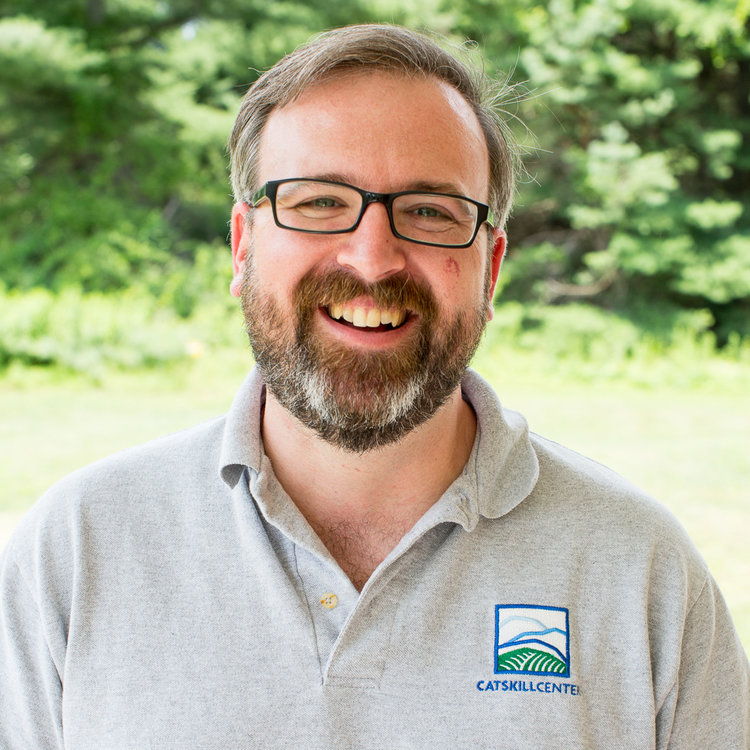
Jeff Senterman

Jeff Senterman is the Executive Director of the Catskill Center for Conservation and Development in Arkville, NY, a member of the Board of Directors for the American Hiking Society, the Catskill Watershed Corporation and the Central Catskills Chamber of Commerce. Jeff graduated with a degree in Environmental Science from Lyndon State College and worked for many years as an Environmental Planner in New England before coming back to New York and the Catskills in the nonprofit sector.

SD: What is the number one issue The Catskill Center is concentrating on?

JS: To me climate change is the number one issue and the greatest challenge of our time. How would the Catskills look like in 2030 or 2050? I struggle to understand that, and work towards aligning The Catskill Center’s programs so that we can protect the natural environment while at the same time support a sustainable human environment. Unfortunately, certain communities will lose sustainability over the next few decades not because of drought and fires like we see in the West, but because of flooding. Events like Hurricane Irene will become more common and will displace communities located in floodplains. So, climate change is the lens that we are looking through to build sustainable communities.

SD: What solutions are you envisioning?

JS: Building infrastructure that is resilient to flooding is one. The bridges that are being built now are at much higher elevation for this reason. Also, when various entities buy properties located in floodplains to clear the space, relocation options should be put in place for people whose homes are being bought so these people do remain in the Catskill Region and don’t leave the area altogether. We at the Catskill Center are always working to create connections and build partnerships that advance viable ideas.

SD: How about the wildlife?

JS: We are already seeing species whose habitats are endangered in other parts of the country migrating towards the Catskill Region. As climate changes, more species will be looking for new habitats. We are trying to understand these migration patterns and create an island of biodiversity that connects with the Appalachians and bridges into the Adirondacks. Organizations like The Nature Conservancy and Open Space Institute are working to protect the routes for species to migrate.  

SD: The Catskill Center serves four counties – Ulster, Sullivan, Greene, and Delaware which are located in different Regional Economic Development Councils: Ulster and Sullivan are located in Mid-Hudson, Greene in the Capital Region, and Delaware in the Southern Tier. Each of these regional councils develop their own strategic plans with different economic priorities. The Catskill Region seems to be split between three different economic frameworks: Mid-Hudson, the Capital Region, and the Southern Tier. How do you at the Catskill Center reconcile this and work to support the entire Catskill Region?

JS: This has been a difficult conversation. The Catskills are not recognized as their own region and that is a detriment to our area. It’s the same with the NYS DEC and NYS DOT – various Catskills counties are assigned to different regions and that makes coordinating efforts a challenge. The Catskills have been struggling to build and sell a regional identity for decades. There is a lack of cooperation unlike what you see in other tourist destinations like Vermont. We at the Catskill Center have been working on forging and promoting a regional identity that the tourists and the residents alike can make sense of. The Catskills Visitor Center in Mt. Tremper is representative of such efforts. 

SD: Let’s talk about the Catskills Visitor Center.

JS: The Catskills Visitor Center opened in 2015 as a partnership between the Catskill Center and the DEC. It was initially called Catskills Interpretive Center. It took us sometime to figure out how to run the Center, what works, and what needs improvement. Through the advocacy work of the Catskill Center, we managed to secure funds in the State Budget that are specifically designated for the Visitor Center, both in 2020 and 2021.

SD: I know you have some exciting news about the Visitor Center.

JS: In 2017 we began work on renovating the interior of the Visitor Center to include exhibits showcasing the natural assets, the history, and the culture of the Catskill Mountains. We secured a Smart Growth grant from the DEC for scoping and planning efforts. We hired a consultant. And we are now in the final stages of construction. The project was stalled in 2020 due to the pandemic. But we are happy to announce that the exhibits will be completed and open to the public on Saturday, September 4th over the Labor Day weekend.

SD: What will the exhibits include?

JS: They will include the geological history of the region, current flora and fauna, the watershed, the communities, and the historic arc from Native Americans through the era of the Grand Hotels in the late 1800s to the Catskills of today. The exhibits tell the story of the Catskills. There is also a rolling mural in the style of the Hudson River School that summarizes the story. We think these exhibits interpret the Catskills in a way that is accessible to anyone.

SD: What other attractions does the Visitor Center include?

JS: There are two miles of walking trails around the Center, parts of which are fully ADA accessible. We installed a Fire Tower with spectacular views. Across the street there is access to the Esopus River. Let’s say you drive from downstate, and you only have one hour to experience the Catskills, the Visitor Center will give you that experience.  

SD: With the Covid restrictions in place, what trends have you been noticing that are here to stay?

JS: For a year and a half we worked completely remotely. Now we have a flexible work schedule with some remote work and some office work. There is more flexibility in both scheduling and utilizing the space. The pandemic has taught us to be flexible. Hosting meetings on Zoom has increased participation. Our workshops and roundtables used to have 15 people in attendance, usually the same ones. Now we have around 200 people attending via Zoom. It’s also more environmentally friendly because we don’t have to drive that much. 

SD: Final thoughts?

JS: Through its advocacy efforts the Catskill Center creates opportunities. We assess the region’s needs, and that’s what we advocate for when we go to Albany. We have aspirational goals looking towards the future, but at the same time we focus on objectives that are reasonable and doable.   

Founded in 1969, the Catskill Center’s mission is to protect and foster the environmental, cultural, and economic well-being of the Catskill Region. Learn more at catskillcenter.org.

SOCIAL MEDIA TIPS FOR SMALL BUSINESSES

Photo by freestocks.org on Pexels.com

At the end of a focus group with professionals active in various industries, we came away with the following tips / recommendations for small businesses:

  1. Create a mission statement that will inform your message and strategy  
  2. Know your audience
  3. Learn where your audience is most active (what platform)
  4. Conduct research – know your niche market and competitors
  5. If your product / service serves multiple niches, use a mix of platforms (channels) and messaging
  6. Be relevant to your audience
  7. Be persistent and consistent
  8. Start an email list first then drive your subscribers to your social media 
  9. Start with basics and continue to build
  10. Start with one platform you’re most equipped for
  11. Engage with your audience and respond promptly to questions and comments
  12. Put passion in your messaging
  13. Add value don’t just sell
  14. Post quality content that interests your audience
  15. Create content that drives people to your website
  16. Block off time in your calendar for content creation
  17. Use a mix of product / service promotions and industry articles
  18. Use a scheduling program like Buffer or Hootsuite
  19. Plan your posts in advance – build an editorial calendar
  20. Always use @ and #
  21. Be local first
  22. Use high quality pictures
  23. Use videos, including live video
  24. Determine one clear action you want your audience to take
  25. Be open minded, always experiment